

Are you ready to buy your first home? It’s an exciting time isn’t it? I can remember the thrill I felt when I was first ready to join the property market. However, it can also feel quite daunting too, as you step into a world of unfamiliar terms and jargon. Don’t panic, at Harbour Mortgage Solutions, we are here to help. One of the first terms you may come across when house-hunting is a mortgage Agreement in Principle.
Does it mean you will definitely get the mortgage you need? Does it affect your credit score? What is it for? Why is it best practice to have a mortgage Agreement in Principle? In this article we will take away all the jargon and provide expert help to explain exactly what it means, how to obtain one, and what happens next.
What is a mortgage Agreement in Principle?

Put simply, a mortgage Agreement in Principle is a provisional indication from a mortgage lender showing how much it may be willing to lend you. It is based on some basic information about your income, spending, debts, and credit history.
Here’s the jargon busting! You might also hear it called:
- An Agreement in Principle, or AIP
- A Decision in Principle, or DIP
- A Mortgage in Principle, or MIP
- A lending certificate
- An Approval in Principle
These phrases usually describe a similar stage in the mortgage journey, although the exact process and terminology can vary between lenders.
The lender will use the information you provide to carry out an initial financial assessment. If you meet its preliminary criteria, it may issue a document stating the amount you could potentially borrow. At this point I am going to stress the word, “potentially“, that is very important. A mortgage Agreement in Principle is not a formal mortgage offer, a promise to lend, or a guarantee that your full mortgage application will be approved.
Why is a Mortgage Agreement in Principle not the Same as a Mortgage Offer?
An Agreement in Principle is an early assessment, often completed before you have found a property. A formal mortgage offer normally comes much later, after you have submitted a full application and the lender has:
- Verified your income and financial information
- Completed its full affordability assessment
- Carried out the necessary credit checks
- Assessed the property you want to buy
- Received an acceptable mortgage valuation
- Checked that the application meets its lending criteria
Therefore, although people sometimes refer to a “mortgage Agreement in Principle”, it is more accurate to describe it as an indication of your borrowing potential. This indication is subject to further, more detailed information about your finances and an assessment of the property.
Why Should I get a Mortgage Agreement in Principle?
A mortgage Agreement in Principle is helpful for several reasons.
- It gives you a clearer idea of your possible property budget. There is little benefit in spending every weekend viewing £300,000 homes if your deposit and likely mortgage borrowing give you a budget of £240,000. Likewise, you might discover that you can realistically consider a wider range of property prices than you expected.
- Estate agents often ask whether you have an Agreement in Principle before arranging a viewing or introducing you to a seller. It reassures them that you have taken an initial look at your finances and are not simply guessing how much you can borrow. They don’t want to waste your time, their time, or the sellers time if they can help it.
- It can highlight potential issues before you fall in love with a home. If a lender will not provide you with a mortgage Agreement in Principle, it may be worth investigating why, before you go property hunting and making an offer.
However, and I cannot stress this enough, the figure provided in your mortgage Agreement in Principle, should be treated as an estimated borrowing limit, not a spending target. Owning a home involves council tax, energy bills, insurance, maintenance, and other everyday costs. As I am sure you are aware, these can fluctuate regularly. Therefore, a comfortable budget is often more sensible than borrowing the maximum available.
How do I get a Mortgage Agreement in Principle?
You can request one directly from a lender, like a bank, or ask a mortgage broker, like ourselves, to arrange one for you.
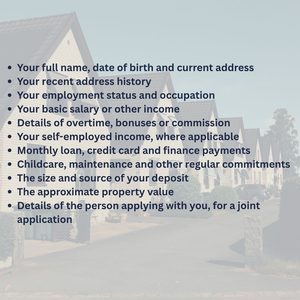
To obtain a mortgage Agreement in Principle, you will usually need to provide information such as:
- Your full name, date of birth and current address
- Your recent address history
- Your employment status and occupation
- Your basic salary or other income
- Details of overtime, bonuses or commission
- Your self-employed income, where applicable
- Monthly loan, credit card and finance payments
- Childcare, maintenance and other regular commitments
- The size and source of your deposit
- The approximate property value
- Details of the person applying with you, for a joint application
It is important to be accurate with this information. Estimating your income too generously, forgetting an existing loan, or understating your monthly commitments could make the initial result unreliable. It is likely to also cause difficulties when the lender checks the information during the full mortgage application.
We will help you gather the right figures and identify a lender whose criteria appear suitable for your personal circumstances.
Will a Mortgage Agreement in Principle Affect my Credit Score?
Now that depends on the lender.
Some lenders use a soft credit search when assessing a mortgage Agreement in Principle. A soft search can appear on the copy of your credit report that you see, but it is not normally visible to other lenders and does not affect your credit score in the same way as a full credit application.
However, other lenders may carry out a hard credit search. A hard search is recorded on your credit file and can be visible to other organisations checking it. Several hard searches over a short period may affect your credit profile. If you’d like to know more about soft or hard credit checks visit this article on Experian.
Consequently it is best practice to ask, before proceeding with a mortgage Agreement in Principle, which type of search will be carried out. This is especially important if you are thinking about approaching several lenders to compare the Agreement in Principle offers. Naturally, using a mortgage broker, like Harbour Mortgage Solutions, may help you avoid making unnecessary applications because your adviser can consider lender criteria before recommending where to apply. It does not, however, guarantee acceptance.
How Long Does a Mortgage Agreement in Principle Last?
Again, the validity period varies between lenders, but commonly a mortgage Agreement in Principle lasts for around 30 to 90 days. The document should show an expiry date or explain how long it remains valid. If it expires before you find a property, it may be possible to renew it, but the lender could ask for updated information and may run another credit search.
Mortgage rates, affordability calculations, and lending criteria can change, even over short period of time. A lender may therefore reach a different decision when a mortgage Agreement in Principle is renewed. If your circumstances change, for example, you change jobs, take out car finance, reduce your working hours, or use some of your deposit, you should speak to your mortgage adviser. Even if your mortgage Agreement in principle is still within its stated validity period, it may no longer reflect what you can realistically borrow.
What Stops a Mortgage Agreement in Principle Becoming a Mortgage Offer?

It is very encouraging when you receive a mortgage Agreement in Principle, but several things can still affect the full application.
1. Your documents do not support the original information
A lender may ask for payslips, bank statements, accounts, tax calculations, or other evidence. If the verified figures differ from those provided initially, the lender may reduce the loan amount or decline the application.
2. Your circumstances change
A new credit agreement, change of employment, reduction in income, or increased monthly spending could alter te lender’s affordability assessment.
3. Your credit history contains unexpected information
Missed payments, defaults, County Court judgements or financial links to another person could influence the decision. Different lenders have different criteria, so a credit issue does not necessarily mean that a mortgage will no longer be available to you.
It is best practice to review your credit reports before applying so that you can identify mistakes or information that may need attention. You can do this through companies like Experian, Equifax UK, and TransUnion.
4. The property is not acceptable to the lender.
Mortgage approval relates to both the applicant and the property. A lender might have concerns about the construction type, condition, location, lease length, resale potential, or a particular development. Additionally, the mortgage valuation may also be lower than the price you have agreed to pay. This is sometimes called a down valuation and could mean you need a larger deposit, need to renegotiate the price, or reconsider the purchase altogether.
5. The lender’s criteria or products change
It’s frustrating, but it happens. Mortgage products can be withdrawn, and lending rules may change between receiving your initial mortgage Agreement in Principle and submitting a full application. A mortgage Agreement in Principle does not reserve an interest rate unless the lender specifically confirms otherwise.
Can a Mortgage Agreement in Principle be Declined?
Yes. A lender may decline the request if the application does not meet its initial affordability, credit-score, or lending criteria. Don’t panic though. This does not automatically mean every lender will reach the same decision. Mortgage lenders assess applications differently. One may accept a type of income, employment arrangement, or credit history that another will not.
If you are declined, avoid immediately making several more applications. First, try to understand the possible reason. Check that the information entered was accurate and review your credit files for mistakes or unexpected entries. An experienced mortgage broker, like ourselves, can assess your circumstances and help identify an appropriate next step. No broker can guarantee approval, but careful research can reduce the risk of unsuitable applications.
Do I need a Mortgage Agreement in Principle Before Viewing Properties?
There is no universal legal requirements to one in place before viewing a home. However, as I highlighted earlier, some estate agents and new-build developers may ask for evidence that you appear able to proceed.
Additionally, having a mortgage Agreement in Principle can place you in a stronger position. It may show the seller that you have already considered your finances and you could move forward with a mortgage application if your offer is accepted. It can be particularly useful in a competitive market. However, it does not make you a cash buyer and it does not guarantee that your purchase will complete.
Another important point needs to be made here too. An estate agent working for the seller cannot require you to use its in-house mortgage adviser as a condition of passing on your offer. You are free to choose your own mortgage adviser and lender.
Can First-Time Buyers get an Agreement in Principle?
Yes. In fact, arranging one can be especially useful when exploring a first-time buyer mortgage. If you have never purchased a property before, you may be unsure how your salary, deposit, debts, and monthly commitments translate into mortgage borrowing. An Agreement in Principle can give your property search a sensible starting point.
Before viewing hoes, remember to budget for more than the deposit. Depending on the property and your circumstances, you may also need money for:
- Conveyancing and legal costs
- A survey
- Mortgage or valuation fees
- Land Transaction Tax in Wales, where applicable
- Buildings and contents insurance
- Removal costs
- Repairs, furnishings and initial household expenses
The Welsh Revenue Authority provides current information about Land Transaction Tax, including applicable rates and rules.
Can I get an mortgage Agreement in Principle if I am Self-Employed?
Being self-employed does not automatically prevent you from obtaining a mortgage Agreement in principle or a mortgage for that matter. The lender will want to understand your income and how substantial it appears. Depending on your business structure and the lender’s criteria, it may consider accounts, tax calculations, tax-year overviews, salary, dividends or share or business profits.
Additionally, the number of years you have been trading can also influence which lenders are available. Some lenders may consider applicants with a shorter trading history, while others require a longer record.
This is an area where mortgage criteria can vary considerably. As an independent mortgage broker, we can assess the way your income is structured and research lenders that may be appropriate, rather than relying on a simple salary multiple.
What Happens After I Receive an Agreement in Principle?

Once a mortgage Agreement in principle has been issued, you can use it to guide your property search.
When you find a suitable home and your offer is accepted, your broker can help you select an appropriate mortgage product and submit the full application. The lender will then review your supporting documents, complete its detailed checks and arrange a mortgage valuation.
If everything is acceptable, the lender may issue a formal mortgage offer. Your conveyancer will deal with the legal work, searches and enquiries needed before contracts can be exchanged and the purchase completed.
A little advice. Avoid taking out new credit cards, or new credit agreements, or making significant changes to your finances during this period without speaking to your mortgage adviser. A lender may carry out further checks before completion, and changes could affect the application.
How can Harbour Mortgage Solutions Help?
At Harbour Mortgage Solutions, we believe mortgage advice should be friendly, clear and personal.
We can talk you through your income, deposit, regular commitments and future plans before researching suitable mortgage options. We can also explain:
- How much you may be able to borrow
- Which income a lender may consider
- Whether a credit search will be soft or hard
- What documents you are likely to need
- How your deposit affects your mortgage options
- The difference between an Agreement in Principle and a formal offer
- What happens after your offer on a property is accepted
We are independent mortgage advisers based in Barry, helping first-time buyers, home movers and homeowners across South Wales and throughout the UK. So, if you are planning to buy a home and would like expert, friendly help, contact Harbour Mortgage Solutions today. We will take the time to understand your circumstances, explain your options clearly and help you take your next step with confidence.
The information in this article is a general guide and does not constitute personalised financial, mortgage, tax or legal advice. Mortgage eligibility, interest rates and lending criteria vary and may change. All applications are subject to the lender’s assessment, criteria and approval.
Think carefully before securing debts against your home. Your home may be repossessed if you do not keep up with repayments on your mortgage or any other debt secured on it.